


Noticing changes in a loved one’s memory or behavior can bring up worry, confusion, or a sense that something is shifting. Families often describe this early period as a time filled with questions, especially when they aren’t sure what the changes mean or how quickly they may progress. While every person’s journey is unique, having a simple roadmap can make the process feel more manageable for families.
Dementia is commonly grouped into three stages: early, middle, and late. Each one brings its own changes in memory, communication, and daily support needs. While dementia is subtle in the earliest stages, it does eventually lead to the need for more advanced professional care.
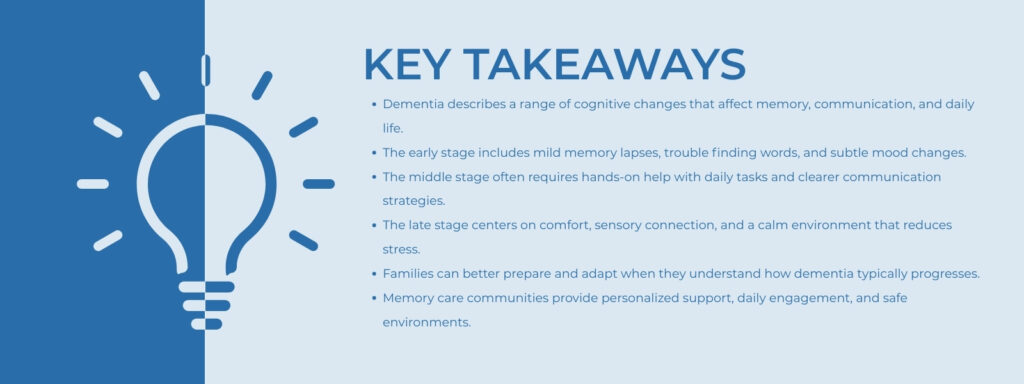
Key Takeaways
- Dementia describes a range of cognitive changes that affect memory, communication, and daily life.
- The early stage includes mild memory lapses, trouble finding words, and subtle mood changes.
- The middle stage often requires hands-on help with daily tasks and clearer communication strategies.
- The late stage centers on comfort, sensory connection, and a calm environment that reduces stress.
- Families can better prepare and adapt when they understand how dementia typically progresses.
- Memory care communities provide personalized support, daily engagement, and safe environments.
What Is Dementia?
Dementia is an umbrella term for symptoms that affect memory, reasoning, and communication. It isn’t one disease, but rather a general description of cognitive changes that become strong enough to impact daily life. While the causes can vary, dementia eventually leads to someone needing round-the-clock care to preserve their quality of life.
How Does Dementia Progress?
Dementia progress is different for every person, and changes don’t always happen at the same pace. In the early stages, it causes minor shifts in memory, thinking, and behavior. However, as it progresses further, these symptoms worsen.
The Early Stage: Recognizing Initial Changes
In the beginning, you might notice small changes that are easy to dismiss. Many people remain independent during this stage, but gentle adjustments may begin to help daily life feel smoother.
Changes in Memory and Thinking
Early memory changes often appear as misplacing objects or forgetting recent conversations. Your loved one may still handle familiar tasks but struggle with new or complex ones. These changes are gradual, making compassion and patience especially helpful.
Difficulty with Words and Conversations
You may notice more pauses or repeated questions during conversations. Finding the right words can become frustrating, even when the person knows exactly what they want to say. Conversations may feel slower or require more cues, so you’ll need to shift how you approach communicating with your loved one.
Shifts in Mood or Personality
Personality changes can show up as withdrawal, irritability, or reduced interest in favorite activities. These shifts often stem from the person noticing their own challenges, even if they don’t talk about them.
The Middle Stage: Adapting to New Needs
During the middle stage, daily tasks usually require more hands-on support. Families often begin adjusting the home environment, routines, and communication styles to maintain safety and comfort. This stage can be demanding, and many caregivers find that outside support becomes especially valuable.
Increased Need for Daily Support
Tasks like dressing, bathing, and preparing meals may become harder to complete independently. Breaking tasks into small steps can help things feel less overwhelming. Throughout this stage, gentle guidance can make each day feel more manageable.
Changes in Communication and Behavior
Communication often shifts to shorter phrases or simple responses. Body language becomes even more important, and your tone can provide comfort when words fall short. Behaviors such as pacing or restlessness may appear as ways of expressing unmet needs.
Keeping Your Loved One Safe and Engaged
Safety becomes a larger focus as confusion or mobility changes increase. Simple activities like music, short walks, or hands-on crafts can help maintain connection and enjoyment. Offering choices, even small ones, can help your loved one feel more involved.
The Late Stage: A Focus on Comfort and Connection
In the later stage, the focus shifts entirely to providing comfort and preserving connection. Verbal communication may become limited, but you can still share meaningful moments.
Communicating Through the Senses
Connection can happen through touch, sound, sight, and smell. Playing their favorite music, looking at old photos together, or simply holding their hand can be very reassuring. These sensory moments often bring warmth to the day.
Providing Comfort and Quality of Life
Comfort becomes the guiding priority as physical needs increase. A calm environment helps reduce agitation and supports restful periods. Soft blankets, soothing lighting, and favorite items can make their space feel familiar. Every small expression of care contributes to their well-being.
The Importance of a Soothing Environment
Peaceful surroundings can ease confusion or distress. Soft lighting, minimal noise, and predictable routines help create a sense of security. These elements work together to bring comfort to your loved one’s days.
How a Supportive Community Can Help
As dementia progresses, many families look for additional support that can provide consistency, safety, and daily reassurance. Memory care communities are designed to offer care that feels both structured and compassionate, which helps residents stay connected to familiar routines.
Memory care offers:
- Personalized care that adjusts to changing needs
- Trained team members who understand dementia behaviors and communication
- Daily engagement activities tailored to residents’ abilities
- A secure, easy-to-navigate environment that reduces stress and confusion
- Support for families who want guidance, updates, and peace of mind
Memory care brings together a blend of safety, structure, and meaningful interaction. It gives families room to breathe and offers patient, thoughtful care each day.
Finding Support for Your Family and Loved One
Dementia is complicated, but learning more can help you feel more prepared to offer the right support at the right time. While the journey can be emotional, having a clear sense of what to expect can make each step feel less uncertain. With the right resources and guidance, your loved one can continue to experience moments of comfort, connection, and familiarity.
Here at The McKendree, we welcome families with warmth and understanding. You’re not alone, and our incredible team is here to give your loved one the care they deserve. Whether you’re considering memory care or simply want to talk through your loved one’s needs, we’re here for you. Schedule a visit with us today, and let’s help your loved one.